
Net metering in the Philippines lets a customer with an on-site renewable system of up to 100 kW export surplus power to the distribution utility and receive a peso credit on the bill. Since the ERC amended the rules in 2025 (Resolution No. 15, Series of 2025), unused credits are banked and rolled over to later bills, the REC meter is optional, and credits can transfer to a new owner when the property is sold. Exported energy is valued at the utility's monthly generation charge, not the full retail rate. In March 2026 the DOE told utilities to process applications within 10 working days during the national energy emergency.
The rules in one table
| Item | Rule | Source |
|---|---|---|
| Size limit | Up to 100 kW per customer | Meralco, under the amended rules |
| Export price | Utility's monthly generation charge (blended generation cost), excluding other generation adjustments | ERC Res. 15 s.2025, NMA template, Sec. 5 |
| Unused credits | Banked and rolled over to current and later bills | ERC Res. 15 s.2025, Annex A, Sec. 18 |
| Property sale | Credits transfer to the new owner, with a new agreement and a conforme letter | Annex A, Sec. 18 |
| REC meter | Voluntary; waived by affidavit, generation then estimated | Annex A, Sec. 19 |
| Documents | Application form, CFEI, net-metering agreement, COC fee; no extras such as a bill of materials | ERC advisory, 22 Sep 2025 |
| Meter cost | Difference for replacing the meter capped at ₱3,000 for existing residential customers | ERC advisory, 22 Sep 2025 |
| Study, testing, commissioning | No charge to the applicant | Annex A, Sec. 17; ERC advisory |
| Utility processing time | 10 working days, including technical rectifications, during the energy emergency | DOE advisory, 30 Mar 2026 |
| LGU permits | 3 working days each; deemed approved if not acted on | DOE advisory, 30 Mar 2026 |
How the bill is calculated
Each month the utility reads two registers on the bi-directional meter: energy imported from the grid and energy exported to it.
- Imported kWh are billed at the normal retail tariff, with all its components.
- Exported kWh are multiplied by the utility's monthly generation charge. That gives the export credit in pesos.
- The export credit and any credit carried from the previous month are subtracted from the import bill. If the result is positive, you pay it. If it is negative, the remaining credit is carried to the next bill.
The difference between steps 1 and 2 is what matters. The generation charge is only one part of the retail tariff, so an exported kWh is worth less than a kWh you avoid importing. Using your own solar at home is always worth more than exporting it. That is why self-consumption, load shifting and batteries still matter under net metering.
Credits are bill credits, not cash. Meralco's guidance says unused credits stay banked while the account and agreement remain eligible.
The application, step by step
Meralco publishes a six-stage process. Other utilities differ in the details, but the same ERC rules apply.
- Applyform and documents
- Evaluationdistribution impact study
- Permitselectrical permit, CFEI
- Agreementsign the NMA, pay fees
- Commissioningmeter, tests, start date
- Application. Submit the utility's form with the account, applicant, system and installer details. Since the ERC advisory of 22 September 2025, utilities may not ask for extras such as a bill of materials or equipment catalogues.
- Evaluation. The utility decides whether a distribution impact study is needed and checks the hosting capacity of your transformer. Meralco publishes an indicative table. For example, a 25 kVA transformer has an indicative aggregate maximum of 10 kW of solar, and the final assessment can approve less.
- Permits and inspection. The LGU issues the electrical permit and the Certificate of Final Electrical Inspection (CFEI). Under the DOE advisory, applicants who already have a building permit need only these two, each within three working days.
- Agreement. Sign the net-metering agreement. Notarisation is not mandatory and electronic signatures are allowed. If you waive the REC meter, add the affidavit and waiver.
- Meter and commissioning. The utility installs the bi-directional meter and tests the system for anti-islanding and safe parallel operation. The DOE advisory asks utilities to install the meter once the installation is complete, without waiting for the remaining paperwork.
- Certificate of Compliance. The utility files the COC with the ERC on your behalf. The COC application fee is paid to the ERC; Meralco lists it as ₱1,500. The ERC advisory encourages utilities to start crediting exports from the date of successful commissioning, regardless of when the COC application is submitted.
Do not export before commissioning. Meralco warns that an ordinary one-way meter may record reverse energy as consumption, so you would pay for power you gave away.
Technical points the utility checks
Meralco's published requirements include:
- Anti-islanding: the system must stop energising the grid within 2 seconds of an outage.
- Reconnection: only after 10 minutes, once supply has returned and the grid is stable.
- Batteries: allowed, but not automatically approved. Declare the battery and any transfer switch in the application.
- Changes after approval: tell the utility before changing panel or inverter capacity, models, batteries, protection or wiring.
Under the net-metering agreement template, the utility may limit or disconnect a system it finds non-compliant with the Distribution Services and Open Access Rules and the Philippine Distribution Code, after three days' written notice (or reasonable notice in an emergency).
What one Philippine system shows
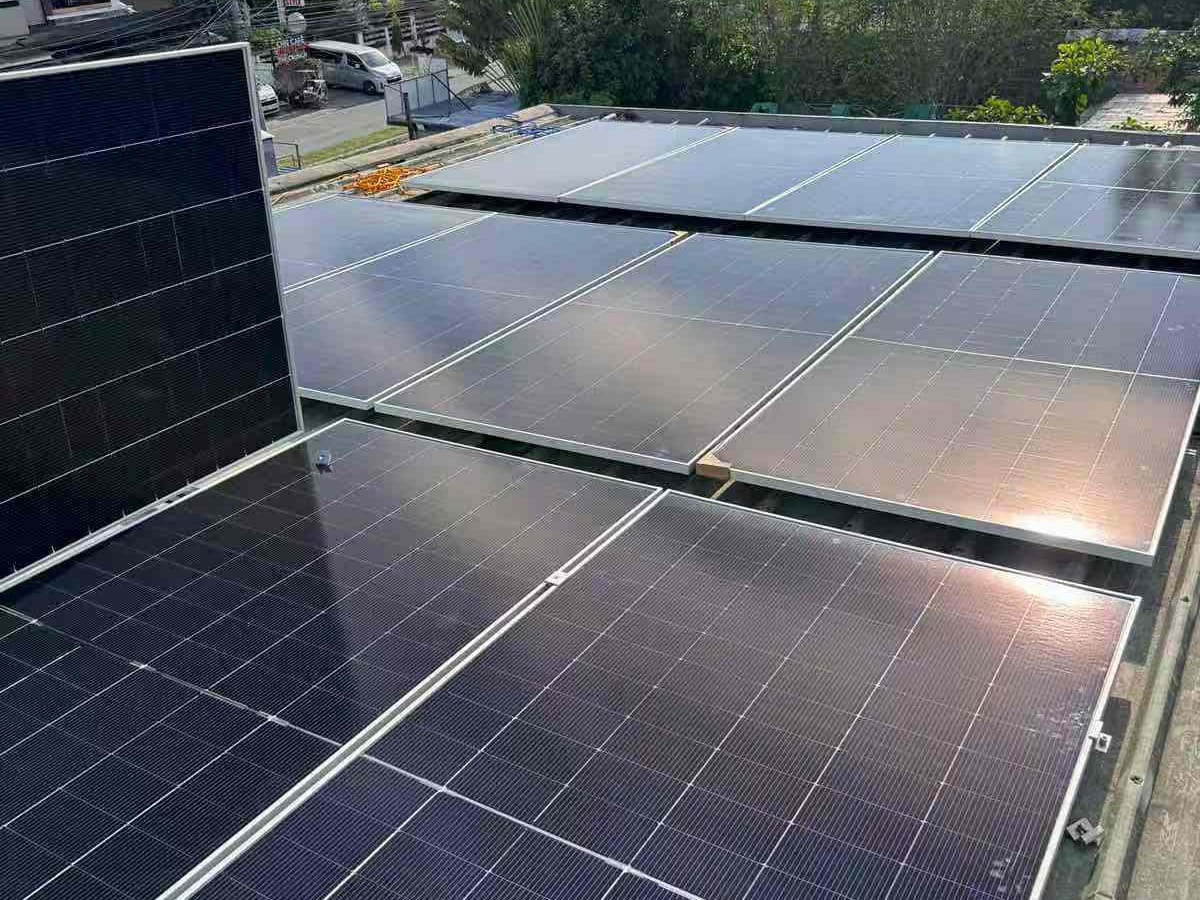
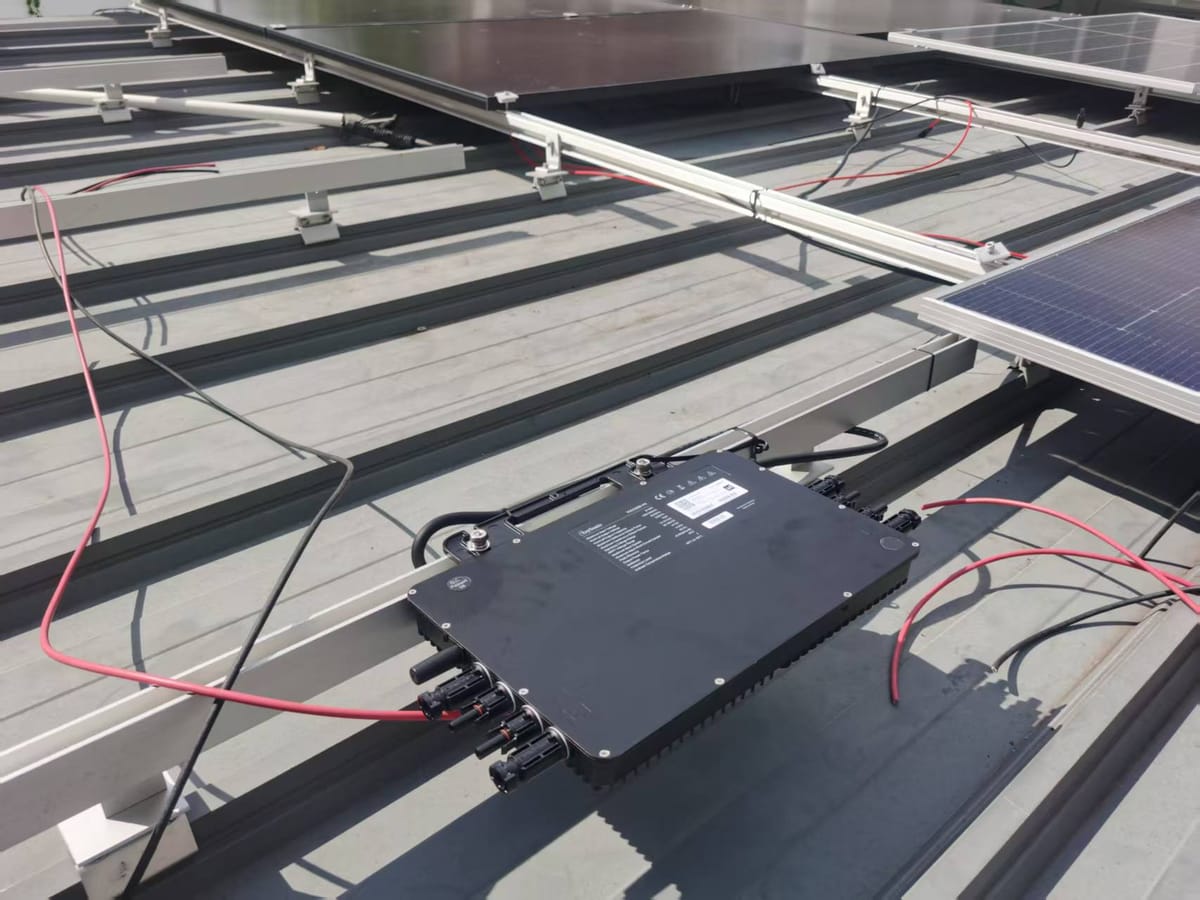
A recent VaySunic installation in the Philippines shows why the export price matters. The local installer fitted 12 solar panels (7.5 kWp) with three VaySunic SolarCore VM2250W-P4 microinverters, each handling four panels. The installer also prepared the home's net-metering application.
Monitoring data from the VIP Cloud app for one day, 6 November 2026:
| Reading | Value |
|---|---|
| Solar production | 33.21 kWh |
| Used in the home | 7.92 kWh (23.8%) |
| Exported to the grid | 25.29 kWh (76.2%) |
| At 15:04 | 4.33 kW produced, 0.5 kW used, 3.83 kW exported |
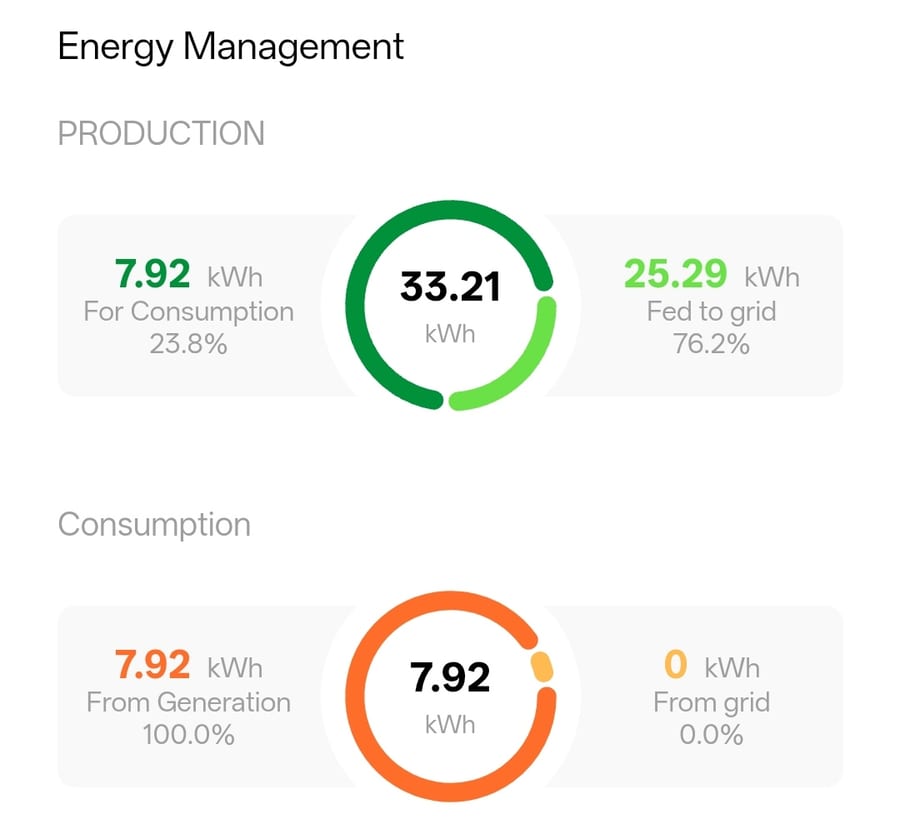
On this day, about three-quarters of the output went to the grid. Under net metering, each of those 25 kWh earns only the generation charge. Each of the 7.92 kWh used at home saves the full retail rate. For a home like this, there are two ways to get more value from the same panels. Move flexible loads such as laundry, water heating or pre-cooling into the middle of the day. Or add a battery, so that the midday surplus covers the evening. One day is not a yearly average, but the pattern is common in homes that are lightly used during the day.
Frequently asked questions
Do net-metering credits expire?
The 2025 amended rules say all credits are banked, rolled over and credited to current and later bills. The section on credits sets no expiry date. Credits are applied to bills; they are not paid out in cash.
How much do I get for each exported kWh?
The utility's monthly generation charge, based on its blended generation cost. It changes every month and is lower than the full retail rate, because it excludes distribution, transmission and other charges.
How much does the bi-directional meter cost?
For an existing residential customer, the difference the utility may charge for replacing the meter is capped at ₱3,000 by the ERC advisory of 22 September 2025. The distribution impact study, testing and commissioning are free of charge.
How long does approval take?
The DOE advisory of 30 March 2026 sets 10 working days for the utility, including technical rectifications, and 3 working days for each LGU permit, during the national energy emergency. Before that, the ERC rules allowed the utility 20 days. Check which timeline applies when you apply.
Can I have a battery with net metering?
Yes. Declare it in the application. The utility reviews the battery and any transfer switch; approval is not automatic. A battery lets you use more of your solar at home, where each kWh is worth the retail rate.
My system is over 100 kW. What now?
Net metering is limited to 100 kW. A larger own-use system can be installed as a zero-export system under DOE Department Circular DC2026-08-0017, which has no size cap but allows no export.
How VaySunic can help
VaySunic systems are already running in many installations in the Philippines. A net-metering system pays back best when it exports as little as possible. VaySunic systems combine SolarCore microinverters or SolarHub hybrid microinverters with PowerCube storage, and EnergyPilot, our local energy management (EMS) controller, sends midday surplus to the battery before it goes to the grid. Where the utility caps export or the customer starts on zero export, the same controller holds feed-in at the set limit. Certification status varies by model and market; contact us for current certificates for the Philippines. Installers and distributors can find terms in our distributor programme.
Sources
- ERC Resolution No. 15, Series of 2025, amending the net-metering rules (Meralco-hosted copy, PDF)
- ERC, Advisory to on-grid distribution utilities in compliance with the net-metering program, 22 September 2025 (Meralco-hosted copy, PDF)
- DOE, Advisory on fast-tracking net-metering applications, 30 March 2026 (Meralco-hosted copy, PDF)
- Meralco, Solar net metering
- Meralco, Net-metering application