
Most existing solar systems can take a battery without replacing the inverter. The usual way is an AC-coupled battery: it has its own inverter, connects on the AC side next to the existing system, and uses a meter at the grid connection to charge from surplus solar instead of exporting it. It does not need to talk to the existing inverter, so the brand of that inverter matters less than people expect. Replacing the old inverter with a hybrid model makes more sense when it is near the end of its life, or when you want the battery and new panels on one unit.
Three ways to add storage
| AC-coupled battery | DC-coupled to the existing inverter | Replace with a hybrid inverter | |
|---|---|---|---|
| What is added | Battery with its own inverter, on the AC side | Battery connected to the DC side of the existing inverter | New hybrid inverter plus battery |
| Existing inverter | Stays as it is | Must already be a hybrid model with a battery port | Removed |
| Works with a third-party inverter | Yes, through measurement at the grid point | Only with batteries that the inverter brand supports | Not relevant (it is replaced) |
| Paperwork | New storage unit and its inverter | New storage unit; inverter settings may change | New inverter and storage unit |
| Best when | The existing inverter works well | The inverter was bought "battery-ready" | The inverter is old, or the system is growing |
AC-coupled is the most flexible option and works with almost any existing grid-tied inverter. The trade-off is that solar energy stored in the battery goes through two extra conversions (AC to DC to charge, then DC to AC to discharge), so slightly more is lost than with a DC-coupled design.
DC-coupled to the existing inverter only works if that inverter is already a hybrid model and the battery is on its manufacturer's compatibility list. Many older string inverters have no battery port at all.
Replacing with a hybrid inverter costs more up front but gives one unit for solar, battery and backup. It is often the right choice for systems that are ten years old or more, or where more panels will be added anyway.
- Existing panels
- Existing inverterBatterywith its own inverter
- Distribution boardoutputs add up
- Existing panels
- Existing hybrid inverterBatteryfrom its compatibility list
- Distribution board
- Existing panels
- New hybrid inverterBattery
- Distribution boardold inverter removed
How an AC-coupled battery works with another brand's inverter
The battery system does not need to control the existing inverter. It works from measurement:
- A meter or clip-on current sensors (CTs) at the grid connection see whether the home is importing or exporting.
- When there is export, the battery charges with that surplus.
- When the home imports, the battery discharges to cover the demand, up to its rated output.
The existing inverter keeps producing as before. This approach also sets the limits of a retrofit:
- No control of the third-party inverter. The new system can reduce export by charging the battery, but it cannot curtail or reconfigure an inverter from another brand. If a site needs a hard export limit, check whether the existing inverter can do this itself.
- Backup is separate. When the grid fails, a grid-tied inverter must switch off (anti-islanding protection). The existing panels then stop producing, and backup loads run from the battery and from any panels connected directly to the new storage unit.
- Outputs add up. The new battery inverter and the existing inverter can export at the same time. The network operator looks at the total installed inverter capacity.
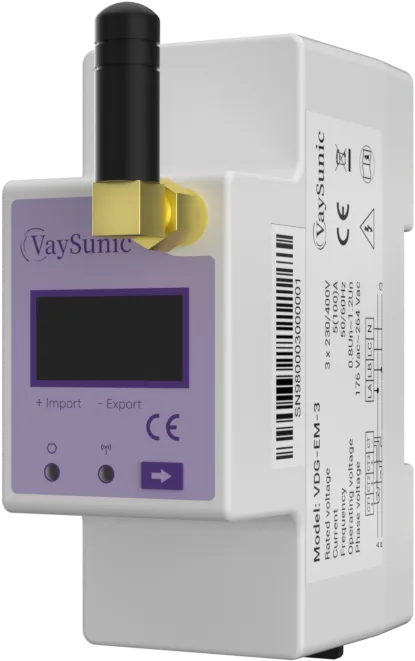
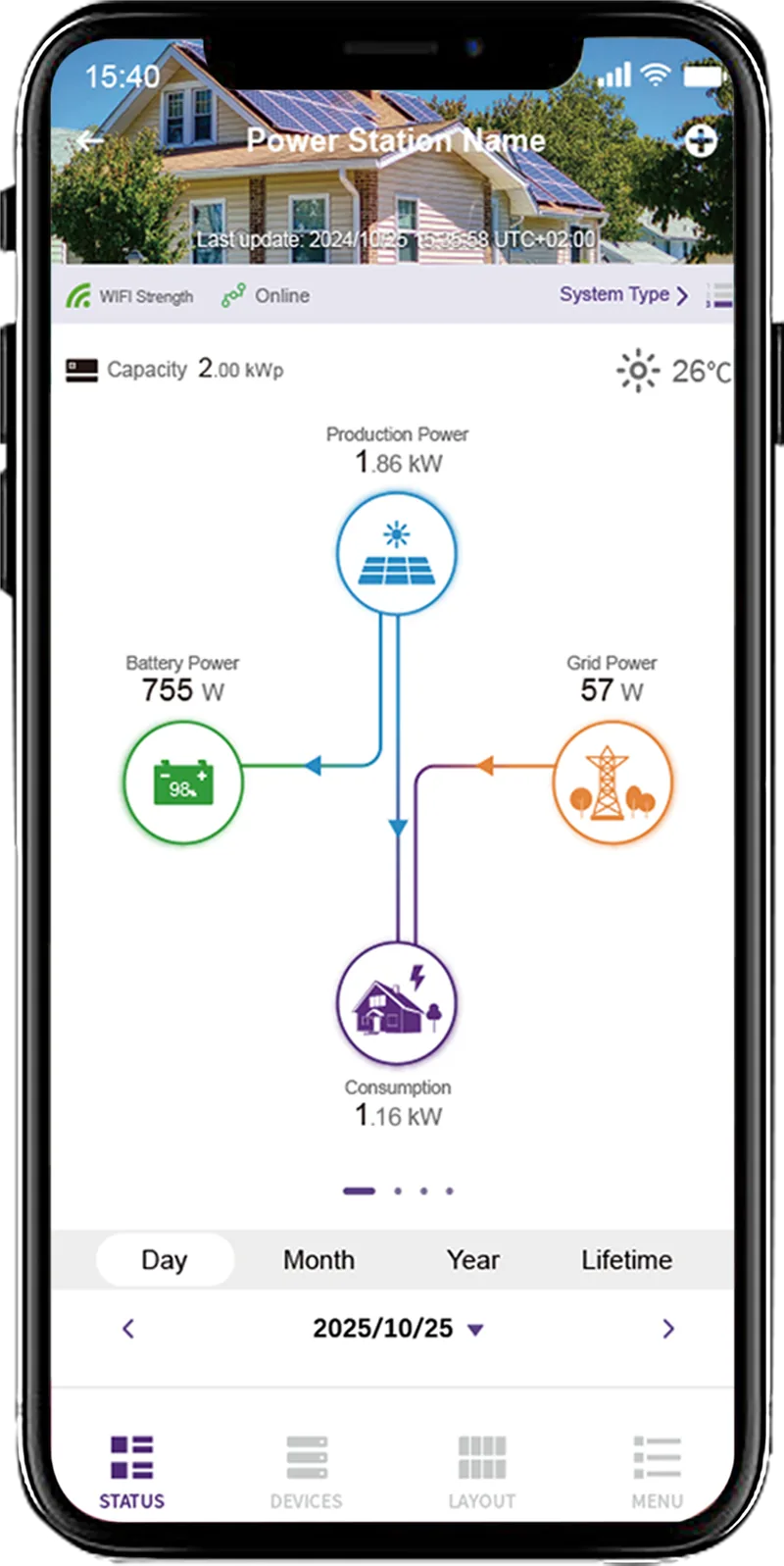
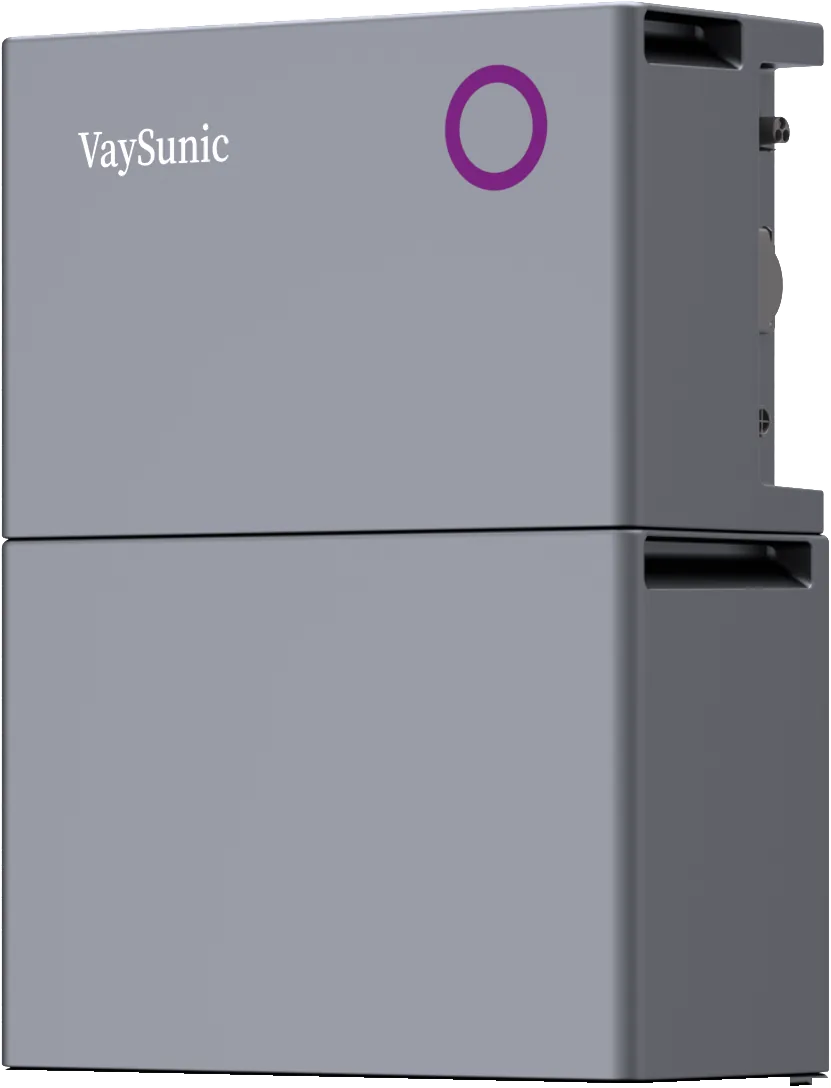
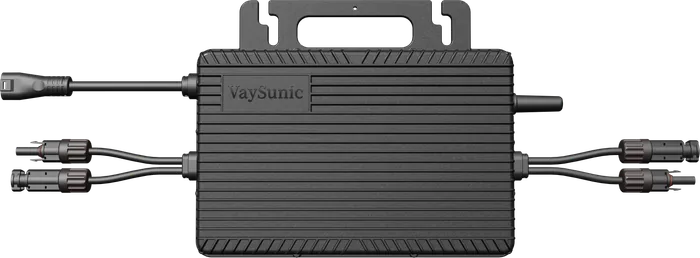
Hover over a part to see what it does.
What to check before quoting
- Brand, model and age of the existing inverter, and whether it is single- or three-phase.
- The grid connection: single- or three-phase, main fuse rating and any export limit already agreed with the network operator.
- Where the meter and distribution board are, and whether there is space for CTs and a new circuit.
- Where the battery can go: indoors or outdoors, clearances and distance to the board.
- Consumption profile and tariff: a battery pays off through evening and night consumption, not through export.
- Which loads should run during a power cut, if backup is wanted.
A photo of the distribution board and of the inverter's type label answers most of these questions.
Germany: registration and grid charging
- Network operator first. Adding a battery changes the generating installation behind the grid connection, so the installer registers it with the local network operator before it is commissioned. Network operators check compliance with the technical connection rules, in particular VDE-AR-N 4105, and usually ask for the unit certificate of the battery inverter.
- Marktstammdatenregister. A battery is a separate unit in the MaStR, including a battery added later to an existing system. It must be registered within one month of commissioning, alongside the existing solar entry.
- Grid charging and the feed-in tariff. Until now, a battery that was charged from the grid as well as from solar could put the EEG tariff for stored solar energy at risk. On 1 October 2026 the Bundesnetzagentur adopted its MiSpeL decision, which allows storage to be used with both grid and solar power while keeping EEG support for the stored renewable share. There are two methods. The Abgrenzungsoption is open to everyone and usually needs two meters. The simpler Pauschaloption is for households with up to 30 kWp of solar and a single meter; it can only be used once the European Commission has approved the legal basis under state aid rules. The network and metering operators have until the end of September 2027 to implement it; until then the methods can be used with their agreement.
In practice, for a household retrofit today, charge the battery from solar only, unless the network and metering operators have agreed to a MiSpeL method for the site. If the customer wants a dynamic tariff with grid charging, plan it with those operators rather than switching it on afterwards.
Australia: what a retrofit battery must meet
For batteries claiming certificates under the Small-scale Renewable Energy Scheme (the Cheaper Home Batteries Program), the Clean Energy Regulator requires, among other things:
- a new battery with a nominal capacity of 5–100 kWh, on the Clean Energy Council's approved battery list;
- compliance with AS/NZS 5139:2019 and state or territory electrical safety laws;
- VPP capability for grid-connected batteries;
- installation by a Solar Accreditation Australia (SAA) accredited installer with a battery endorsement;
- one battery per premises.
For retrofits the regulator is explicit: the existing solar system does not need to be on the CEC's approved product list, but it must comply with state and territory electrical safety rules. Only the inverter the battery connects to has to be VPP-capable; existing solar inverters do not.
Grid-connected inverters must meet AS/NZS 4777.2 and be configured with the settings required in their region, and the installation must follow AS/NZS 4777.1. Adding a battery changes the inverter energy system at the connection point, so the installer follows the connection process of the distribution network service provider (DNSP) before the battery is switched on. Requirements differ between networks.
Checklist for installers and distributors
- Identify the existing inverter from its type label: brand, model, phases, age.
- Pick the coupling. AC-coupled if the inverter works well; DC-coupled only with a hybrid inverter and a listed battery; replace if the inverter is old.
- Check the grid connection, any export limit and the total inverter capacity after the retrofit.
- Plan the CTs or meter at the grid connection, and the battery location and circuit.
- Decide on backup and which loads go on the backup circuit.
- Collect certificates: the battery inverter's grid connection certificate for the market, battery safety certificates, and listings where incentives require them.
- Register: network operator before commissioning; in Germany the MaStR within one month; in Australia the DNSP process and the scheme paperwork.
- Set expectations: the existing inverter is monitored, not controlled, and the panels on it stop during a power cut.
How VaySunic can help
VaySunic designs and manufactures storage, hybrid microinverters and energy meters at its R&D and manufacturing centre in Wuxi, with headquarters in Germany. Our retrofit solution is built for homes that already have solar from another brand:
- See everything first. A three-phase EnergyPilot (VDG-EM-3) in the distribution board measures the grid connection and up to two existing inverters, and shows production, consumption, import and export in one app. Third-party inverters are monitored, not controlled.
- Add storage on the AC side. PowerCube connects next to the existing system, charges from the surplus EnergyPilot sees at the grid point, and scales from 2.5 to 27.5 kWh in 5 kWh steps. It has a backup (EPS) port with up to 3,000 W, and its own solar inputs for new panels.
- Or replace the inverter. The SolarHub hybrid microinverter, from 800 to 3,000 W, runs solar, one to five VB5000D packs (5–25 kWh) and backup in one unit.
We check compatibility per project and do not publish a brand list. Send us the inverter brand and model, the grid connection type and a photo of the distribution board, and ask us for the current certificates for your market. Contact us or see our distributor programme.
Sources
- Bundesnetzagentur, press release: Festlegung zur Marktintegration von Stromspeichern und Ladepunkten (MiSpeL), 1 October 2026
- Verbraucherzentrale, Marktstammdatenregister: Das müssen Sie bei Solaranlage und Co. wissen (July 2026)
- photovoltaik.info, PV-Anlage mit Speicher nachrüsten: Recht und Anmeldung
- Clean Energy Regulator, Solar batteries (updated July 2026)
- DCCEEW, Cheaper Home Batteries Program: eligibility information
- AEMO, AS/NZS 4777.2 Inverter Requirements standard